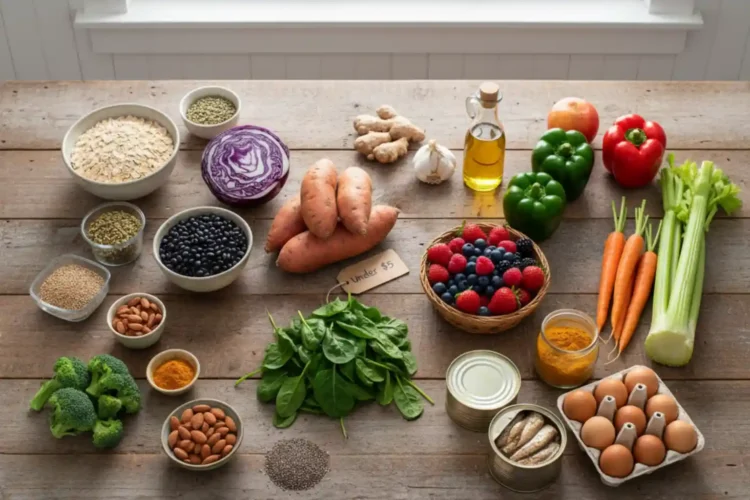
Looking to combat inflammation without breaking the bank? It’s possible to stock your kitchen with powerful, health-boosting foods for less than the price of a latte.
Chronic inflammation is linked to numerous health issues, but the good news is that your diet is one of the most effective tools at your disposal. Learning to identify and shop for budget anti-inflammatory foods is the first and most important step in following an anti-inflammatory diet.
In this definitive guide, we’ll reveal 30 nutrient-dense staples, all under $5 per unit, that fight inflammation. We’ve included expert tips from registered dietitians, a sample meal plan, and a printable shopping list to make your journey easy and affordable.
Essential Budget Anti-Inflammatory Foods for Your Pantry
1. Rolled Oats (~$1.98/lb)
Why it Fights Inflammation: Oats are rich in a special type of soluble fiber called beta-glucan, which feeds beneficial gut bacteria and helps lower inflammatory markers. They also contain unique antioxidants called avenanthramides, known for their inflammation-reducing effects.
Expert Take: “Oats are a fantastic, budget-friendly start to any day. Their fiber content not only helps manage cholesterol but also promotes a healthy gut environment, which is essential for controlling systemic inflammation.” Jessica Cording, R.D
Easy Ways to Enjoy:
- Prepare a warm bowl of oatmeal topped with berries.
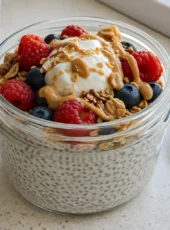
- Make overnight oats for a quick grab-and-go breakfast.
- Grind them into flour for healthier pancakes or baked goods.
2. Dry Lentils (~$1.78/lb)
Why it Fights Inflammation: Lentils are packed with plant-based protein, fiber, and important minerals like selenium and zinc. They are also a great source of polyphenols, which are powerful plant compounds that have been shown to possess strong antioxidant and anti-inflammatory properties.
Expert Take: “Lentils are one of my top recommendations for affordable nutrition. They are incredibly versatile and filling, and their unique combination of fiber and polyphenols makes them a powerhouse for fighting chronic inflammation.” Amanda Blechman, R.D
Easy Ways to Enjoy:
- Cook them into a hearty soup or stew.
- Toss them into salads for a boost of protein and fiber.
- Use them as a base for vegetarian burgers or meatloaf.
3. Canned Chickpeas (~$0.99/can)
Why it Fights Inflammation: Also known as garbanzo beans, chickpeas are loaded with gut-friendly fiber and plant-based protein. A healthy gut is crucial for regulating the body’s inflammatory response, and the high fiber content in chickpeas helps nourish beneficial gut bacteria.
Expert Take: “Canned chickpeas are a pantry must-have. Just be sure to rinse them well to remove excess sodium. They are an incredibly easy way to add anti-inflammatory fiber to almost any meal, from salads to stir-fries.” Jessica Cording, R.D
Easy Ways to Enjoy:
- Blend them into a creamy homemade hummus.
- Roast them with spices for a crunchy, healthy snack.
- Add them to curries, soups, and salads.
4. Canned Black Beans (~$0.99/can)
Why it Fights Inflammation: The deep, rich color of black beans comes from anthocyanins, a type of flavonoid antioxidant that helps combat oxidative stress and inflammation. Like other legumes, they are also an excellent source of prebiotic fiber.
Expert Take: “Don’t overlook the power of black beans. They are inexpensive, convenient, and their antioxidant content is impressive. They are a fantastic food for supporting both heart health and a balanced inflammatory response.” Jessica Cording, R.D
Easy Ways to Enjoy:
- Incorporate them into tacos, burritos, and quesadillas.
- Mash them into bean burgers or dips.
- Mix them into a vibrant quinoa and avocado salad.
5. Brown Rice (~$2.00/lb)
Why it Fights Inflammation: As a whole grain, brown rice is a great source of fiber, which helps manage blood sugar levels and supports a healthy gut microbiome. Unlike white rice, it retains its nutrient-rich bran and germ, which contain beneficial minerals and antioxidants.
Expert Take: “Swapping white rice for brown rice is a simple, effective step towards an anti-inflammatory diet. It’s high fiber content prevents sharp blood sugar spikes, a common trigger for inflammation.” Amanda Blechman, R.D
Easy Ways to Enjoy:
- Use it as a base for stir-fries or grain bowls.
- Serve it as a simple side dish with fish or chicken.
- Add it to soups and stews to make them more filling.
6. Quinoa (~$3.50/lb)
Why it Fights Inflammation: Quinoa stands out because it is a complete protein, meaning it contains all nine essential amino acids. It is also packed with antioxidants, including quercetin and kaempferol, which have demonstrated potent anti-inflammatory effects in studies.
Expert Take: “Quinoa is a nutritional superstar. It offers more protein and antioxidants than many other grains. It’s an excellent gluten-free option that provides sustained energy and helps keep inflammation in check.” Jessica Cording, R.D
Easy Ways to Enjoy:
- Make a refreshing quinoa salad with chopped vegetables and a lemon vinaigrette.
- Serve it for breakfast as a porridge with cinnamon and fruit.
- Use it to stuff bell peppers or zucchini.
7. Canned Sardines in Water (~$1.12/can)
Why it Fights Inflammation: Sardines are one of the best sources of the marine omega-3 fatty acids EPA and DHA. These specific fats are renowned for their powerful ability to lower inflammation throughout the body by reducing the production of inflammatory substances.
Expert Take: “Canned sardines are an unsung hero of the grocery store. They provide an incredible dose of anti-inflammatory omega-3s for a very low cost. I recommend them to clients constantly.” Amanda Blechman, R.D
Easy Ways to Enjoy:
- Mash them onto whole-grain toast with a squeeze of lemon.
- Toss them with pasta, olive oil, and garlic.
- Mix them into salads for a major protein and nutrient boost.
8. Canned Tuna/Salmon (~$2.50/can)
Why it Fights Inflammation: Similar to sardines, canned tuna and salmon are excellent and affordable sources of EPA and DHA omega-3s. These healthy fats are crucial for brain health and play a direct role in resolving and managing inflammatory processes.
Expert Take: “Canned fish is a game-changer for budget-conscious, healthy eating. Opt for salmon for the highest omega-3 content, or choose chunk light tuna in water for a leaner protein option.” Vicki Shanta Retelny, R.D.N
Easy Ways to Enjoy:
- Make classic tuna or salmon salad sandwiches on whole-wheat bread.
- Form them into patties to create salmon burgers.
- Mix into casseroles, pasta dishes, or salads.
9. Extra Virgin Olive Oil (~$4.99/small bottle)
Why it Fights Inflammation: Extra virgin olive oil is rich in monounsaturated fats and antioxidants. One key compound, oleocanthal, has been shown to have anti-inflammatory effects similar to ibuprofen. It is a cornerstone of the heart-healthy Mediterranean diet.
Expert Take: “Extra virgin olive oil should be a staple in every kitchen. Its anti-inflammatory benefits are well-researched. Use it for salad dressings and finishing dishes to get the most potent effects.” Jessica Cording, R.D
Easy Ways to Enjoy:
- Drizzle it over salads and roasted vegetables.
- Use it as a base for homemade vinaigrettes.
- Mix with herbs for a flavorful bread dip.
10. Almonds (~$4.99/bag)
Why it Fights Inflammation: Almonds are a fantastic source of the antioxidant vitamin E, which helps protect cells from oxidative damage. They also provide healthy monounsaturated fats and magnesium, a mineral that is essential for regulating the body’s inflammatory response.
Expert Take: “A small handful of almonds makes for a perfect anti-inflammatory snack. They provide healthy fats, fiber, and protein to keep you full and stable blood sugar, which helps prevent inflammation.” Amanda Blechman, R.D
Easy Ways to Enjoy:
- Snack on a small handful between meals.
- Sprinkle sliced almonds over yogurt, oatmeal, or salads.
- Use almond flour in baking for a gluten-free, nutrient-dense option.
Do you need a shopping guide to go with this list? Check out our full Anti-Inflammatory Grocery List.
Fresh & Cheap Anti-Inflammatory Foods from the Produce Aisle
11. Green Cabbage (~$0.96/lb)
Why it Fights Inflammation: Cabbage is a cruciferous vegetable loaded with glucosinolates, sulfur-containing compounds that help reduce unwanted inflammation. It is also a great source of prebiotic fiber, which nourishes the healthy bacteria in your gut.
Expert Take: “Cabbage is one of the most underrated vegetables. It’s incredibly inexpensive, versatile, and its high fiber content is fantastic for gut health, which is a key regulator of the body’s inflammatory status.” Amanda Blechman, R.D
Easy Ways to Enjoy:
- Shred it raw for a crunchy coleslaw or salad.
- Roast cabbage wedges with olive oil and spices.
- Add it to soups and stir-fries for extra bulk and nutrients.
12. Sweet Potatoes (~$1.88/lb)
Why it Fights Inflammation: The vibrant orange flesh of sweet potatoes is a sign of their high beta-carotene content, a powerful antioxidant the body converts to Vitamin A. They are also an excellent source of Vitamin C, which plays a critical role in controlling inflammation.
Expert Take: “Sweet potatoes are a wonderful, nutrient-dense carbohydrate. Their natural sweetness is satisfying, and they are packed with antioxidants that help protect the body’s cells from damage and stress.” Vicki Shanta Retelny, R.D.N
Easy Ways to Enjoy:
- Bake them whole and top with black beans or yogurt.
- Cut them into wedges and roast for healthy fries.
- Mash them as a flavorful side dish.
13. Carrots (~$1.32/lb)
Why it Fights Inflammation: Carrots are famously rich in beta-carotene, an antioxidant that helps bolster the immune system and can reduce inflammation. Their rich antioxidant profile helps neutralize free radicals that can cause cellular damage.
Expert Take: “Carrots are a perfect, low-cost snack. Their beta-carotene content is not only great for vision but also plays a significant role in supporting a healthy immune system and calming inflammatory pathways.” Jessica Cording, R.D
Easy Ways to Enjoy:
- Eat them raw with hummus for a simple snack.
- Roast them to bring out their natural sweetness.
- Shred them into salads, soups, and even baked goods.
14. Onions (~$1.05/lb)
Why it Fights Inflammation: Onions are a concentrated source of the flavonoid antioxidant quercetin. Quercetin has been studied extensively for its ability to inhibit the production of inflammatory compounds like histamines, making it a powerful inflammation fighter.
Expert Take: “Onions are a foundational ingredient in countless healthy dishes for a reason. They add incredible flavor and deliver a potent dose of the anti-inflammatory antioxidant quercetin. Don’t be afraid to use them generously in your cooking.” Amanda Blechman, R.D
Easy Ways to Enjoy:
- Use them as a flavor base for almost any savory dish.
- Slice them raw into salads and sandwiches for a sharp crunch.
- Caramelize them slowly for a rich, sweet topping.
15. Russet Potatoes (~$0.60/lb)
Why it Fights Inflammation: Often unfairly demonized, the humble potato is a fantastic source of nutrients when prepared healthfully. The skin is packed with potassium, which helps regulate fluid balance, and the flesh provides a good dose of immune-supporting Vitamin C.
Expert Take: “Potatoes can absolutely be part of an anti-inflammatory diet. The key is to bake or roast them, not deep fry them. A baked potato with the skin on is a very affordable source of potassium and other key nutrients.” Vicki Shanta Retelny, R.D.N
Easy Ways to Enjoy:
- Bake them whole and stuff with vegetables and Greek yogurt.
- Dice and roast them with herbs and olive oil.
- Boil and mash them, keeping the skin on for extra fiber.
16. Broccoli (~$1.92/lb)
Why it Fights Inflammation: Broccoli is a true anti-inflammatory powerhouse. It is loaded with sulforaphane, a potent compound that has been shown to activate antioxidant pathways and reduce key markers of inflammation in the body.
Expert Take: “If you are looking to add more anti-inflammatory foods to your diet, broccoli should be at the top of your list. The compound sulforaphane is one of the most powerful natural inflammation fighters found in food.” Jessica Cording, R.D
Easy Ways to Enjoy:
- Steam or roast florets as a simple side dish.
- Add it to stir-fries, pastas, and casseroles.
- Chop it finely and add it to salads or slaws.
17. Bananas (~$0.55/lb)
Why it Fights Inflammation: Bananas are a great source of potassium, which is vital for maintaining healthy blood pressure and nerve function. They also contain prebiotic fiber, which helps feed the beneficial bacteria in your gut linked to a healthy inflammatory response.
Expert Take: “Bananas are the ultimate convenience food. They are portable, cheap, and provide a gentle source of fiber that is great for digestive health. A happy gut is a less inflamed gut.” Amanda Blechman, R.D
Easy Ways to Enjoy:
- Eat one as a simple, on-the-go snack.
- Blend them into smoothies for natural sweetness and a creamy texture.
- Slice them over oatmeal or whole-grain cereal.
18. Oranges (~$1.10/lb)
Why it Fights Inflammation: Oranges are famous for their high Vitamin C content. Vitamin C is a powerful antioxidant that helps protect cells from damage and is essential for a properly functioning immune system, helping to prevent the over-activation of inflammatory responses.
Expert Take: “The benefits of Vitamin C go far beyond just fighting colds. It’s a critical antioxidant that helps manage inflammation throughout the body. Eating a whole orange provides fiber in addition to the vitamins.” Vicki Shanta Retelny, R.D.N
Easy Ways to Enjoy:
- Peel and eat it as a refreshing snack.
- Add segments to salads for a burst of juicy flavor.
- Squeeze fresh juice to use in dressings or marinades.
19. Apples (~$1.62/lb)
Why it Fights Inflammation: Apples contain both soluble fiber and the flavonoid quercetin, the same antioxidant found in onions. The combination of fiber and antioxidants in apples is beneficial for gut health and helps reduce oxidative stress in the body.
Expert Take: “There’s real wisdom in the old saying about an apple a day. The fiber feeds your good gut bacteria, and quercetin helps calm inflammation. They are a perfect, portable, and affordable snack.” Jessica Cording, R.D
Easy Ways to Enjoy:
- Eat it whole as a simple and satisfying snack.
- Slice it into salads or oatmeal.
- Bake it with a sprinkle of cinnamon for a healthy dessert.
20. Kiwi (~$2.18/lb)
Why it Fights Inflammation: A small kiwi packs a huge punch of Vitamin C, often more than a medium orange. This high concentration of the antioxidant vitamin helps support immune function and protect the body from the cellular stress that can lead to inflammation.
Expert Take: “People are often surprised to learn how much Vitamin C is in a kiwi. For its size, it’s one of the most nutrient-dense fruits available and a fantastic food for supporting a healthy inflammatory balance.” Amanda Blechman, R.D
Easy Ways to Enjoy:
- Slice it in half and scoop out the flesh with a spoon.
- Chop it into a fruit salad or use it as a topping for yogurt.
- Blend it into a vibrant green smoothie.
Your Freezer Guide to Fighting Inflammation
21. Frozen Spinach (~$1.24/pkg)
Why it Fights Inflammation: Frozen spinach is picked at peak ripeness and flash-frozen, locking in its rich supply of antioxidants, iron, and vitamins. It is an incredibly convenient way to add anti-inflammatory greens to your meals year-round.
Expert Take: “The freezer aisle is your best friend for budget-friendly nutrition. Frozen spinach retains its nutrients beautifully and prevents food waste. A bag is a must-have for boosting the anti-inflammatory power of any meal.” Vicki Shanta Retelny, R.D.N
Easy Ways to Enjoy:
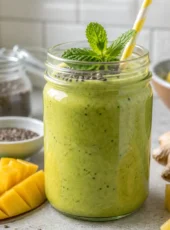
- Blend a handful into your morning smoothie.
- Stir it into pasta sauces, soups, and stews.
- Mix it into scrambled eggs or omelets.
22. Frozen Berries (~$2.64/bag)
Why it Fights Inflammation: Berries get their brilliant colors from powerful antioxidants called polyphenols and anthocyanins. These compounds are well-known for their ability to fight oxidative stress, support brain health, and reduce inflammation.
Expert Take: “Frozen berries offer the same, if not more, antioxidant benefits as fresh, but at a fraction of the cost, especially out of season. They are perfect for adding natural sweetness and a major anti-inflammatory punch to your diet.” Amanda Blechman, R.D
Easy Ways to Enjoy:
- Top your oatmeal, yogurt, or cereal with them.
- Blend them into a thick, nutrient-dense smoothie.
- Gently warm them on the stove for a simple, healthy dessert topping.
23. Frozen Edamame (~$1.99/bag)
Why it Fights Inflammation: Edamame (young soybeans) are a complete plant-based protein and a great source of fiber. They also contain isoflavones, which are plant-based compounds that have been shown to have anti-inflammatory effects in the body.
Expert Take: “Frozen shelled edamame is a fantastic snack to keep on hand. It provides a satisfying combination of protein and fiber that helps stabilize blood sugar and prevent inflammation spikes between meals.” Jessica Cording, R.D
Easy Ways to Enjoy:
- Steam or boil them and sprinkle with a little sea salt for a simple snack.
- Add them to salads and grain bowls for a protein boost.
- Incorporate them into stir-fries and fried rice dishes.
24. Frozen Peas (~$1.50/bag)
Why it Fights Inflammation: This freezer staple is a good source of plant-based protein, fiber, and anti-inflammatory nutrients like Vitamin K and Vitamin C. Its fiber content helps support a healthy gut, which is foundational for managing inflammation.
Expert Take: “Never underestimate the humble green pea. A bag of frozen peas is one of the most affordable ways to add extra fiber, protein, and valuable vitamins to a meal with zero prep work.” Vicki Shanta Retelny, R.D.N
Easy Ways to Enjoy:
- Mix them into pasta dishes, soups, or casseroles.
- Serve them as a simple, quick side dish.
- Blend them into a vibrant pea soup or mash them with mint.
25. Frozen Butternut Squash (~$2.99/bag)
Why it Fights Inflammation: Like other orange vegetables, butternut squash is packed with beta-carotene, which your body converts into Vitamin A. This powerful antioxidant helps control inflammation and supports a healthy immune system.
Expert Take: “Buying pre-cut frozen butternut squash saves you time and effort compared to preparing a whole one. It makes incorporating this vitamin-rich, anti-inflammatory vegetable into your weekly meals incredibly easy.” Amanda Blechman, R.D
Easy Ways to Enjoy:
- Roast it until caramelized for a delicious side dish.
- Boil and blend it into a creamy, savory soup.
- Mash it as a healthy alternative to white potatoes.
Flavor Boosters for an Affordable Anti-Inflammatory Diet
26. Turmeric (spice) (~$2.99/jar)
Why it Fights Inflammation: Turmeric contains the active compound curcumin, one of the most powerful natural anti-inflammatory substances ever studied. Curcumin works by blocking inflammatory pathways at the molecular level, helping to reduce pain and swelling.
Expert Take: “Turmeric is the king of anti-inflammatory spices. For best absorption, always pair it with a pinch of black pepper, which contains piperine. A little goes a long way in calming inflammation.” Jessica Cording, R.D
Easy Ways to Enjoy:
- Add it to curries, soups, and stews for a warm, earthy flavor.
- Blend it into smoothies or mix it into a “golden milk” latte.
- Sprinkle it over roasted vegetables or scrambled eggs.
Looking to stock your spice cabinet, too? Browse the top picks on our Anti-Inflammatory Spices List.
27. Green Tea (~$3.50/box)
Why it Fights Inflammation: Green tea is loaded with powerful polyphenol antioxidants, most notably epigallocatechin gallate (EGCG). EGCG can reduce inflammation by protecting cells from damage and inhibiting the production of pro-inflammatory molecules in the body.
Expert Take: “Swapping a sugary drink for a cup of green tea is a fantastic health upgrade. Its EGCG content provides potent anti-inflammatory and antioxidant benefits that support overall wellness.” Amanda Blechman, R.D
Easy Ways to Enjoy:
- Drink it hot with a squeeze of lemon.
- Brew it and let it cool for a refreshing iced tea.
- Use brewed green tea as the liquid base for smoothies.
28. Garlic (~$0.50/head)
Why it Fights Inflammation: Garlic contains sulfur compounds, such as allicin, which are released when it is crushed or chopped. These compounds have been shown to have anti-inflammatory and immune-boosting effects, helping the body fight off pathogens.
Expert Take: “Garlic is more than just a flavor agent; it’s a medicinal food. To maximize its benefits, let chopped or crushed garlic sit for a few minutes before cooking. This allows the beneficial compounds to fully develop.” Vicki Shanta Retelny, R.D.N
Easy Ways to Enjoy:
- Use it as a flavor foundation for sauces, stir-fries, and soups.
- Roast whole cloves until they are soft and sweet.
- Infuse olive oil with it for a flavorful dressing.
29. Ginger (~$2.99/lb)
Why it Fights Inflammation: Ginger’s main bioactive compound is gingerol, which is responsible for much of its medicinal properties. Gingerol has powerful anti-inflammatory and antioxidant effects and is often used to soothe digestive upset and reduce nausea.
Expert Take: “Fresh ginger is a wonderful tool for fighting inflammation, especially in the digestive tract. A small amount can make a big difference. I love it in teas and dressings for its zesty, warming flavor.” Jessica Cording, R.D
Easy Ways to Enjoy:
- Steep slices of fresh ginger in hot water for a soothing tea.
- Grate it into stir-fries, marinades, and salad dressings.
- Add a small piece to your smoothie for a spicy kick.
30. Eggs (~$2.50/dozen)
Why it Fights Inflammation: Eggs are an affordable and high-quality source of protein and contain a range of important nutrients, including selenium and choline. Pasture-raised eggs can also be a source of anti-inflammatory omega-3 fatty acids.
Expert Take: “Eggs are a fantastic, nutrient-dense food. The protein helps keep you full and balances blood sugar, which is key to preventing inflammation. They are a perfect vehicle for adding vegetables to your breakfast.” Amanda Blechman, R.D
Easy Ways to Enjoy:
- Scramble, poach, or fry them for a quick, protein-packed meal.
- Hard-boil a batch for easy snacks throughout the week.
- Make a frittata or omelet loaded with spinach, onions, and other vegetables.
A Sample 3 Day Meal Plan to Fight Inflammation on a Budget
Putting these staples together is easier than you think. Here is a sample meal plan to show you how you can create delicious, inflammation-fighting meals using only affordable ingredients from our list.
| Day | Breakfast | Lunch | Dinner |
| 1 | Rolled oats cooked with water or milk, topped with frozen berries and a sprinkle of almonds. | A large salad with spinach, canned chickpeas, shredded carrots, and a simple olive oil vinaigrette. | Baked sweet potato topped with canned black beans and steamed frozen spinach. |
| 2 | Two scrambled eggs cooked with chopped onion and a side of sliced apple. | Hearty lentil soup made with carrots, onions, and garlic. A banana for dessert. | A grain bowl with a base of brown rice, topped with roasted broccoli and canned salmon. |
| 3 | A smoothie blended with a banana, frozen spinach, a scoop of rolled oats, and water. | Quinoa salad mixed with thawed edamame, chopped carrots, and an olive oil and lemon dressing. | Cabbage and potato soup seasoned with garlic and turmeric, with a hard-boiled egg on the side. |
All meals are built from the 30 ingredients shared above. Mix and match based on availability and preferences.
Each recipe can be doubled for leftovers or meal prep. Season with olive oil, garlic, turmeric, or ginger to boost both flavor and anti-inflammatory benefits.
A Quick Note on Budget Foods to Limit
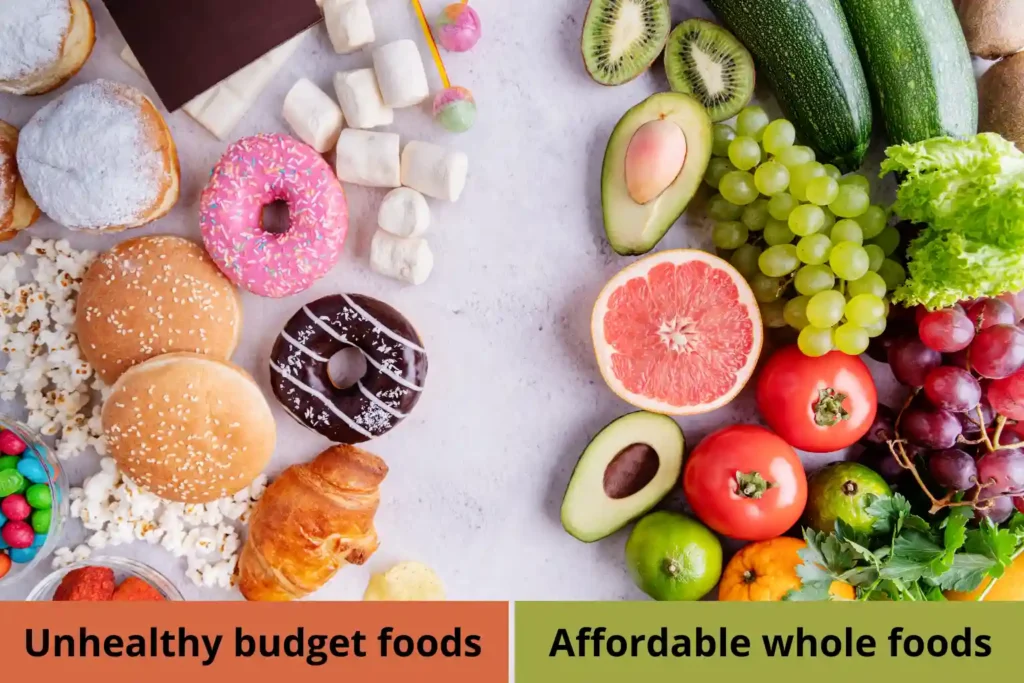
Not all cheap foods are supportive of an anti-inflammatory lifestyle. While they may fit a tight budget, certain processed ingredients can worsen inflammation over time.
Limit or reduce these when possible:
- Refined grains like white bread, white rice, and sugary cereals
- Processed meats such as hot dogs, bacon, or deli meats
- Sugary snacks including pastries, candy, and soda
- Fried foods cooked in industrial seed oils
- Trans fats are often found in margarine or packaged baked goods
These foods are not banned, but it helps to eat them less often. Focus instead on fiber-rich whole grains, fruits, vegetables, legumes, and healthy fats.
FAQ: Common Questions About Budget Anti-Inflammatory Foods
What is the single most powerful anti-inflammatory food on a budget?
While no food works alone, extra virgin olive oil stands out. It contains oleocanthal, which has effects similar to over-the-counter anti-inflammatory drugs. A small bottle goes a long way and adds flavor to nearly any meal.
Are potatoes inflammatory?
Not necessarily. Russet potatoes, when prepared without frying or heavy cream, are full of fiber, vitamin C, and potassium. Enjoy them baked, boiled, or roasted with olive oil for a nourishing option.
How can I use spices to fight inflammation?
Spices like turmeric, ginger, and garlic contain powerful compounds that support immune balance and reduce oxidative stress. Use them in soups, stews, roasted vegetables, or teas.
Is it better to buy fresh, frozen, or canned?
Each has benefits. Frozen produce retains nutrients and lasts longer. Canned beans and fish offer convenience and value. Fresh foods work best for items like garlic or onions. Focus more on the food itself than the format.
Can you eat an anti-inflammatory diet on a low income?
Absolutely. This guide proves you can build an anti-inflammatory pantry and meal plan without overspending. Start with basic staples like oats, lentils, cabbage, and eggs.
Conclusion and Free Shopping List Download
Eating to fight inflammation does not have to cost a fortune. With smart planning and a few go-to ingredients, anyone can build meals that are both budget-friendly and packed with nutrition.
Start small. Pick three or four foods from this list and add them to your next grocery run. Rotate meals using your favorites and try new combinations over time.
For a head start, download our Printable Budget Anti-Inflammatory Grocery List. It includes all 30 items featured in this guide with categories and prices so you can shop with confidence.
As you continue building healthy habits, consider exploring our Anti-Inflammatory Lifestyle Guide for practical ways to support your well-being every day.
You have everything you need to begin. Good food can be simple, healing, and affordable.
Eat well. Spend less. Feel better.