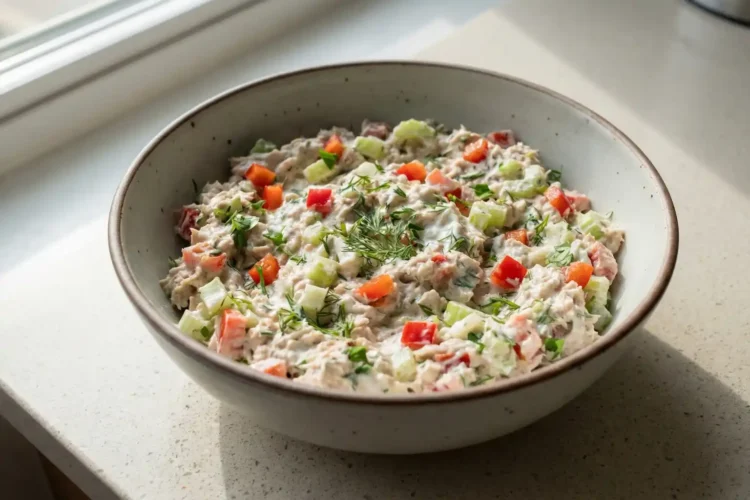
If you’ve ever wondered whether tuna salad can fit into an anti-inflammatory diet, the short answer is yes, with a few smart swaps. This lighter version keeps the creamy texture people love, but skips the heavy mayo overload and leans into ingredients that support lower inflammation. If you’re new to this way of eating, this recipe fits perfectly within the principles outlined in our Anti-Inflammatory Diet Guide.
This healthy tuna salad uses Greek yogurt, crunchy vegetables, and simple add-ins that keep things fresh, satisfying, and lower in calories. It’s quick to make, easy to customize, and works just as well for lunch meal prep as for a quick dinner.
Best part? It still tastes like real comfort food, not “diet food.”
Why This Tuna Salad Works for an Anti-Inflammatory Diet
This tuna salad isn’t just lighter, it’s built around ingredients that actually support an anti-inflammatory way of eating.
First, tuna brings omega-3 fatty acids, which are known for helping calm inflammation, a benefit well-documented by research from Harvard T.H. Chan School of Public Health. Using canned tuna in water or olive oil keeps things simple while still delivering solid protein that keeps you full.
Next comes Greek yogurt. Swapping most (or all) of the mayo cuts saturated fat and adds protein, plus a gentle tang that keeps the salad from tasting flat. If you still want a little richness, a small spoon of mayo can work without tipping things too far.
Fresh vegetables do a lot of heavy lifting here, too. Celery, cucumber, red onion, and herbs add crunch, fiber, and antioxidants. Many of these staples also appear on The Ultimate Anti-Inflammatory Grocery List, making this an easy recipe to build into your weekly shopping routine.
The result is a tuna salad that feels creamy, fresh, and balanced, not heavy or greasy.
Ingredients You’ll Need (With Anti-Inflammatory Swaps)
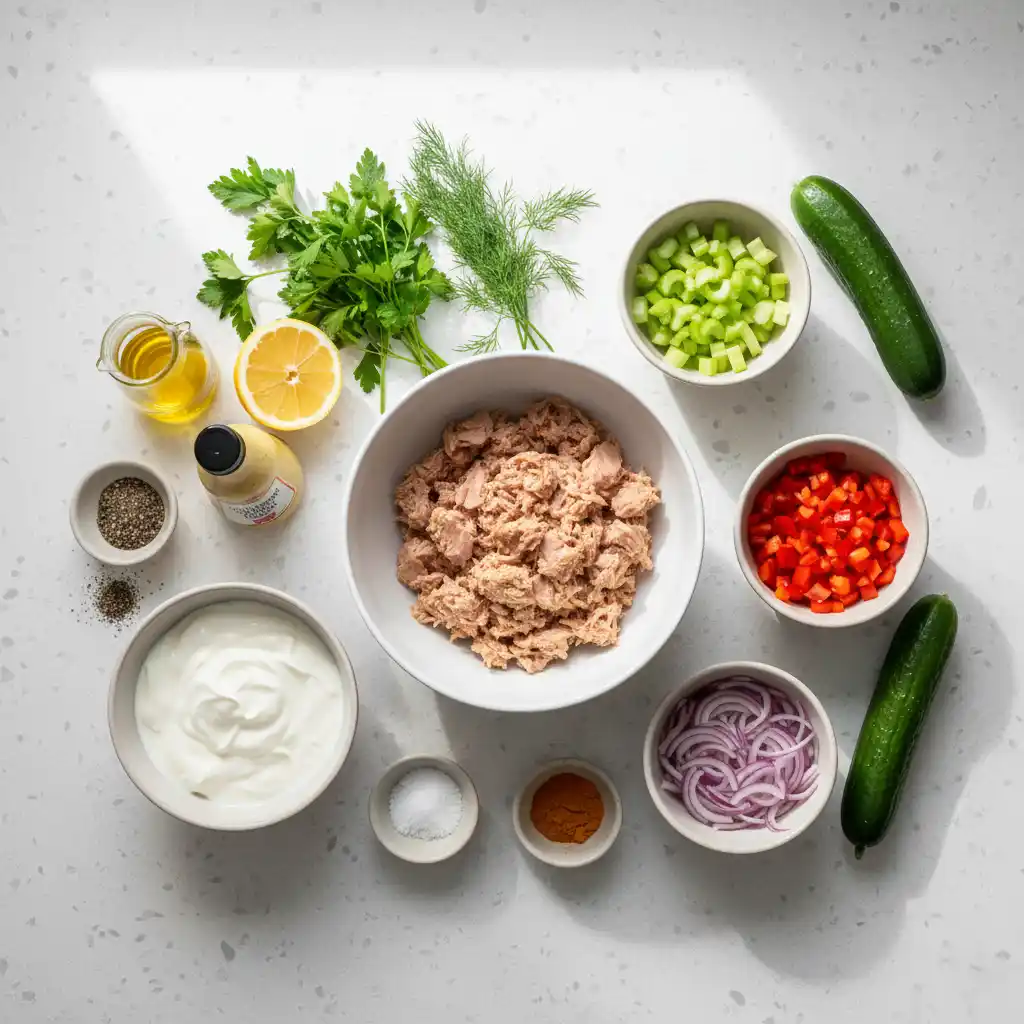
Here’s what goes into this healthy tuna salad, plus a few easy swaps so you can make it work for you.
Tuna
- Canned tuna in water or olive oil
I usually go with solid or chunk light tuna. Drain it well so the salad doesn’t turn watery.
Creamy Base
- Plain Greek yogurt
This replaces most of the mayo and keeps the salad light and protein-rich. - Optional: 1–2 teaspoons mayonnaise
Totally optional, but helpful if you want a slightly richer texture.
Crunchy Veggies
- Celery, finely chopped for classic crunch
- Cucumber, seeded and diced for freshness
- Red onion, minced for bite without overpowering
Healthy Fats & Flavor
- Extra virgin olive oil, just a drizzle
- Fresh lemon juice, brightens everything up
- Dijon mustard (optional) adds depth without heaviness
Herbs & Seasoning
- Fresh parsley or dill, chopped
- Salt and black pepper, to taste
Simple Swap Ideas
- Dairy-free? Use mashed avocado or a plant-based yogurt.
- Want more fiber? Add grated carrots or chopped bell peppers.
- Like heat? A pinch of chili flakes or diced jalapeño works well.
Everything here keeps the salad fresh, balanced, and easy on inflammation, while still tasting like something you actually want to eat.
Step-by-Step Healthy Tuna Salad Recipe
This comes together fast, and a few small steps make a big difference in texture and flavor.
- Drain the tuna well
Open the cans and press out as much liquid as you can. This is the easiest way to avoid a watery tuna salad later. - Flake the tuna
Add the tuna to a medium bowl and gently break it up with a fork. Keep some texture; it shouldn’t turn mushy. - Mix the creamy base
Stir in the Greek yogurt, a small drizzle of extra virgin olive oil, lemon juice, and Dijon mustard if you’re using it. Mix until creamy and smooth. - Add the veggies
Fold in the chopped celery, cucumber, and red onion. Go easy and mix gently so everything stays crisp. - Season and adjust
Add salt, black pepper, and fresh herbs. Taste and adjust the lemon, yogurt, or seasoning as needed. - Rest for better flavor
Let the tuna salad sit in the fridge for 10–15 minutes before serving. This helps the flavors come together and improves the texture.
That’s it. Simple, fresh, and creamy without feeling heavy.
Greek Yogurt vs Mayo — Which Is Better?
Both Greek yogurt and mayo can make a good tuna salad, but they don’t affect your body the same way.
Greek yogurt is lower in calories, higher in protein, and brings a light tang that keeps the salad tasting fresh. It also adds creaminess without relying on heavy fats, which makes it a solid choice for an anti-inflammatory eating style.
Mayonnaise, on the other hand, is richer and smoother, but it’s also higher in calories and saturated fat. That doesn’t mean it’s “bad”, it just works best in smaller amounts.
The best balance
I like using mostly Greek yogurt with a small spoon of mayo mixed in. You get the creaminess people expect from tuna salad, but without weighing it down.
If you want:
- Lightest option: All Greek yogurt
- Creamier texture: Mostly yogurt + a little mayo
- Dairy-free: Mashed avocado or plant-based yogurt
There’s no single right answer, but yogurt-forward usually wins for everyday, anti-inflammatory meals.
Best Veggies to Add for Crunch and Nutrition
Vegetables do more than add crunch; they help keep this tuna salad fresh, filling, and anti-inflammatory friendly.
Celery is the classic choice for a reason. It adds crunch without overpowering the flavor and holds up well for meal prep.
Cucumber brings a light, refreshing bite. Just make sure to remove the seeds so extra moisture doesn’t water down the salad.
Red onion adds sharpness and depth. Finely mincing it gives flavor without taking over the whole bowl.
If you want to mix things up, these also work well:
- Grated carrots for natural sweetness and color
- Bell peppers for extra crunch and vitamin C
- Chopped fresh herbs like parsley or dill for brightness
What to go easy on
Watery veggies like tomatoes can make the salad soggy. If you love them, add them right before serving instead of mixing them in.
The goal is balance, crunchy, fresh, and supportive of inflammation-friendly eating without turning the salad into a veggie soup.
How to Serve This Light Tuna Salad
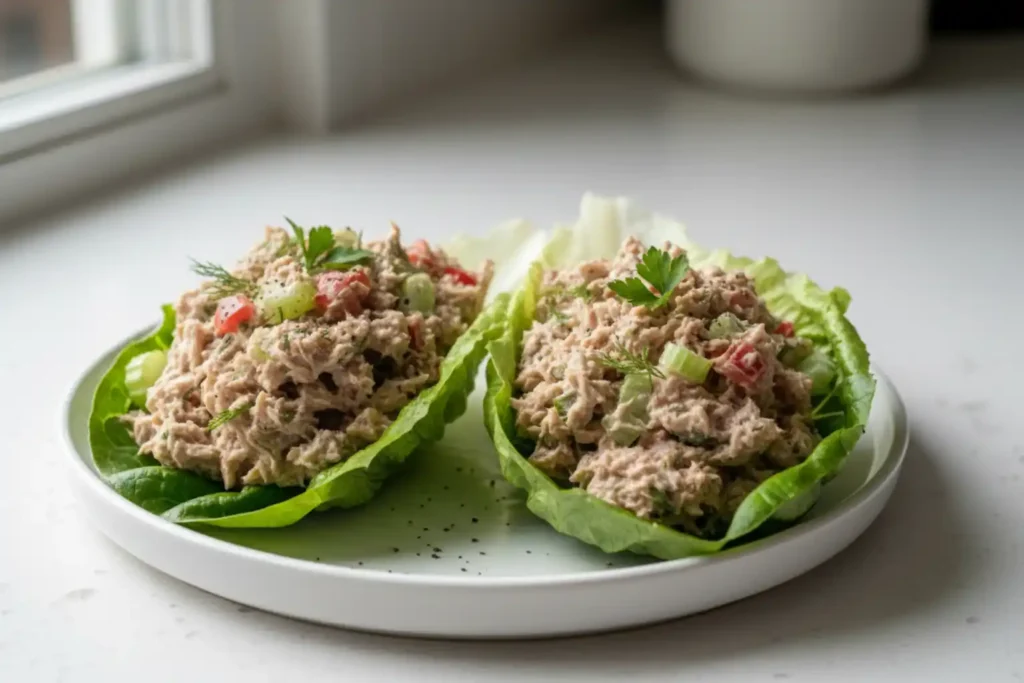
This healthy tuna salad is flexible, which makes it easy to keep things interesting throughout the week.
For a low-cal, anti-inflammatory lunch, spoon it into butter lettuce or romaine cups. It stays crisp and light without needing bread.
If you want something more filling, serve it on whole-grain toast or a slice of seeded bread. For a plant-based option on other days, pairing meals like this with hearty bowls such as our Black Bean Quinoa Bowl helps keep your weekly menu balanced and anti-inflammatory.
Other easy ideas:
- Stuffed into bell pepper halves for crunch and color
- Over mixed greens with olive oil and lemon
- With whole-grain crackers for a simple snack plate
This tuna salad works cold, straight from the fridge, so it’s great for busy days when you want something nourishing without extra effort.
Storage, Meal Prep & Make-Ahead Tips
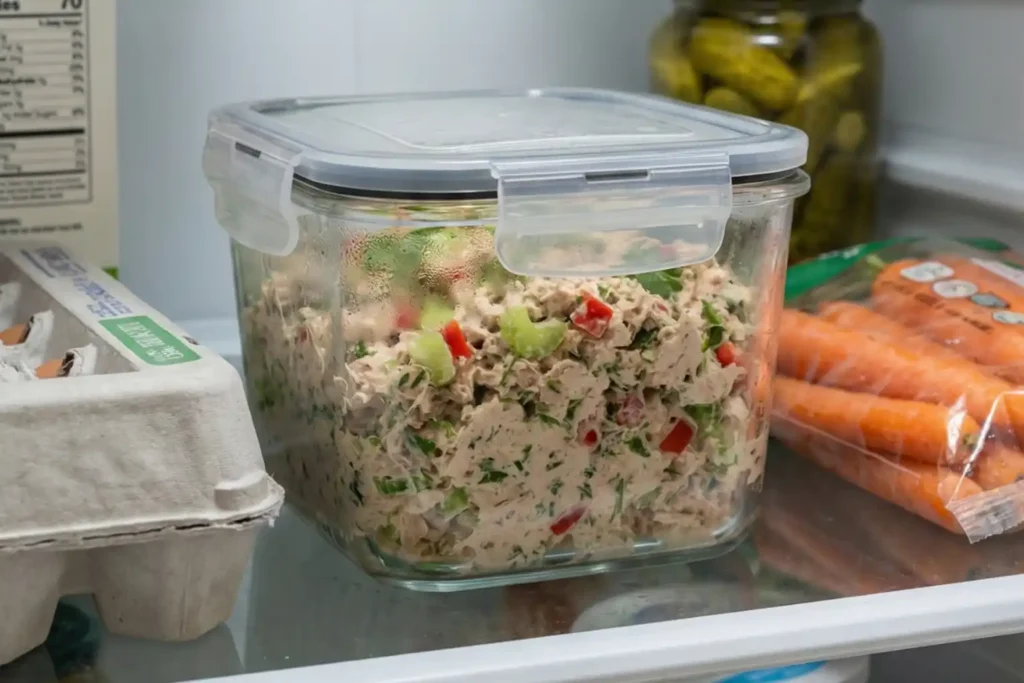
This tuna salad is great for meal prep, as long as you store it the right way.
- Refrigeration: Keep it in an airtight container in the fridge. It stays fresh for up to 3 days.
- Stir before serving: After sitting, the salad may thicken slightly. A quick stir and a squeeze of lemon usually brings it right back.
- Add delicate veggies later: If you’re prepping ahead, wait to add cucumbers or herbs until the day you’ll eat them. This keeps everything crisp.
- Avoid freezing: Tuna salad with yogurt doesn’t freeze well. The texture changes once thawed, so it’s best enjoyed fresh.
For the best flavor, make it a few hours ahead and let it chill. That short rest helps the flavors blend without losing crunch.
FAQ
Is tuna salad anti-inflammatory?
It can be. Tuna provides omega-3 fats, and when you pair it with Greek yogurt, olive oil, herbs, and fresh veggies, it fits well into an anti-inflammatory eating pattern.
Is canned tuna okay to use?
Yes. Canned tuna is convenient and affordable. Choose tuna packed in water or olive oil, and drain it well before mixing to avoid extra liquid.
Can I make this tuna salad dairy-free?
Absolutely. Mashed avocado or a plain plant-based yogurt both work well. You may need a little extra lemon juice to keep the flavor bright.
Is this tuna salad good for weight loss?
It can be. It’s high in protein, lower in calories than traditional versions, and filling enough to help curb snacking when paired with fiber-rich veggies or whole grains.
How do I keep tuna salad from getting watery?
Drain the tuna thoroughly and remove seeds from watery veggies like cucumber. Adding those ingredients closer to serving time also helps.
Can I eat this every day?
It’s fine to enjoy it regularly, but it’s smart to rotate proteins. Mixing in salmon, sardines, or chickpeas keeps meals balanced and varied.

Healthy Anti-Inflammatory Tuna Salad
A light and creamy tuna salad made with Greek yogurt, fresh vegetables, and olive oil for an easy, anti-inflammatory lunch.
4
servings10
minutes180
kcal10
minutesIngredients
2 2 cans of tuna, packed in water or olive oil, well drained
1/3 1/3 cup plain Greek yogurt
1 1 tablespoon extra virgin olive oil
1 1 tablespoon fresh lemon juice
1 1 teaspoon Dijon mustard (optional)
1/3 1/3 cup celery, finely chopped
1/3 1/3 cup cucumber, seeded and diced
2 2 tablespoons red onion, finely minced
2 2 tablespoons fresh parsley or dill, chopped
Salt and Black pepper to taste
Directions
- Drain the tuna very well and add it to a medium bowl. Flake gently with a fork.
- Stir in the Greek yogurt, olive oil, lemon juice, and Dijon mustard until creamy.
- Add the celery, cucumber, red onion, and herbs. Mix gently to keep the texture crisp.
- Season with salt and black pepper. Adjust lemon or yogurt to taste.
- Chill for 10–15 minutes before serving for the best flavor.
Notes
- For extra creaminess, add 1–2 teaspoons mayonnaise.
For dairy-free, swap Greek yogurt with mashed avocado or plain plant-based yogurt.
Store in an airtight container in the fridge for up to 3 days.
Nutrition Facts
- Total number of serves: 4
- Calories: 180kcal
- Fat: 8g
- Carbohydrates: 4g
- Fiber: 1g
- Sugar: 2g
- Protein: 22g
Nutrition Disclaimer
Nutrition information is estimated using standard ingredients and serving sizes. Values may vary based on specific products used, substitutions, and portion sizes.